
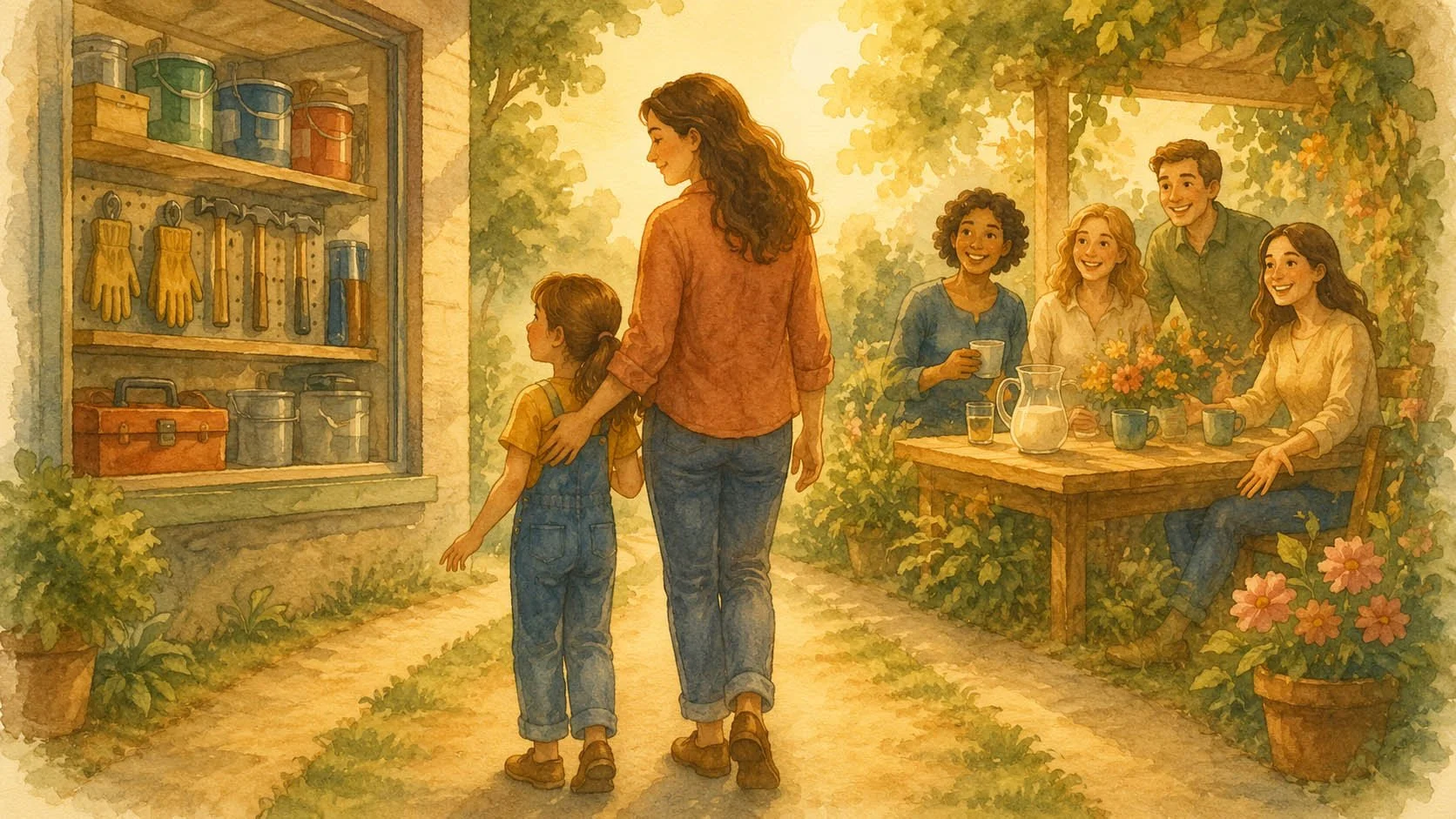
When the Hardware Store Doesn’t Sell Milk: Letting Go of the Parent We Needed and Finding the Family We Deserve
Why We Keep Going Back, Even When It Hurts
Hope as a Survival Strategy
One of the most painful patterns many adults carry is the ongoing hope that this time a parent will finally respond with warmth, approval, or understanding. Even after years, and sometimes decades, of criticism, dismissal, or emotional absence, we still find ourselves turning toward them in moments of vulnerability. We share good news, hoping it will be celebrated. We seek comfort when we’re hurting. We look for reassurance that we’re enough.
This longing isn’t naïve or weak. It’s deeply human. We are wired from birth to seek safety, affirmation, and guidance from our caregivers. Long before logic or insight, attachment is formed in the nervous system.
The child part of us keeps reaching.
The child part of us keeps reaching not because we “should know better,” but because hope is an adaptive survival strategy early in life.
The Hardware Store and the Grief of Reality
Grieving the Parent We Needed
A wise mentor once shared: they’re never going to have milk at the hardware store. No matter how many times you go, how clearly you explain what you need, or how desperately you ask, they simply don’t sell milk there and never will. The problem isn’t that you’re asking wrong.
The problem is that you’re asking in the wrong place.
Most adults understand this metaphor intellectually. Emotionally, it can take much longer to absorb. Coming to terms with who our parents actually are, rather than who we need or want them to be, is often the hardest type of grief, because it’s not the grief of losing a person; it’s the grief of losing a possibility. We are giving up on the fantasy that one day they’ll soften, take responsibility, or finally see us clearly.
Letting go of that hope can feel like giving up. In reality, it’s an act of self-protection.
Recognizing the Limits of a Relationship
It does not mean excusing harmful behavior, minimizing the past, or pretending it didn’t hurt. It means recognizing patterns and allowing ourselves to stop colliding with them.
It means saying, internally if not out loud:
"This relationship has limits, and I will stop asking it to meet needs it has never met."
This shift alone can reduce a tremendous amount of emotional pain. When we stop expecting nourishment from a place that cannot provide it, disappointment loses some of its power.
Separating Love From Support -
When Love Isn’t Emotional Safety
One of the hardest truths to hold is that love and support are not the same thing.
A parent may love you in the only way they know how and still be unable to offer emotional safety, validation, or encouragement. Continuing to seek those things from someone who consistently responds with judgment, selfishness or unpredictable behavior often re-opens old wounds rather than healing them.
Recognizing this distinction allows us to keep relationships in proportion. We can limit what we share, lower expectations, and protect vulnerable parts of ourselves, without necessarily cutting ties.
Where We Actually Get Nourished -
The Role of Found Family
Creating a found family doesn’t mean replacing parents or erasing the past. It means expanding our definition of family beyond biology. Found family can include friends who listen without fixing, mentors who delight in your growth, partners who treat your feelings with care, colleagues who respect your boundaries, or communities where you feel seen rather than evaluated.
At its healthiest, family is not defined by blood but by care.
These relationships are built slowly. They are marked by reliability, and emotional safety. You shouldn’t have to perform or prove your worth in a healthy relationship. You’re allowed to be complex, sensitive, and uncertain. When we allow ourselves to build that kind of trusted family, then we can stop seeking reassurance and support where there is none.
Learning New Patterns of Attachment -
Creating New Templates for Connection
For many people, therapy is one of the first places where being held differently is possible: a space where your inner world is taken seriously, where curiosity replaces judgment, and where your reactions are understood in context.
Over time, this experience can become a template, helping you recognize which relationships nourish you and which ones quietly drain you.
Learning to stop seeking support from people who can’t offer it often feels scary and uncomfortable at first. The urge to “just try one more time” can be strong. We may feel guilt or shame for not believing in our parent despite their flaws.
But each time you choose to turn toward someone safer or toward yourself with compassion, you interrupt an old cycle and create space for something new.
And we finally get to be nourished.
Therapy and Healing Attachment Wounds
If you find yourself stuck in cycles of disappointment with family, or unsure how to loosen old attachment patterns without feeling overwhelmed or guilty, working with a therapist can help.
If this topic resonates with you, you may also find these articles helpful: